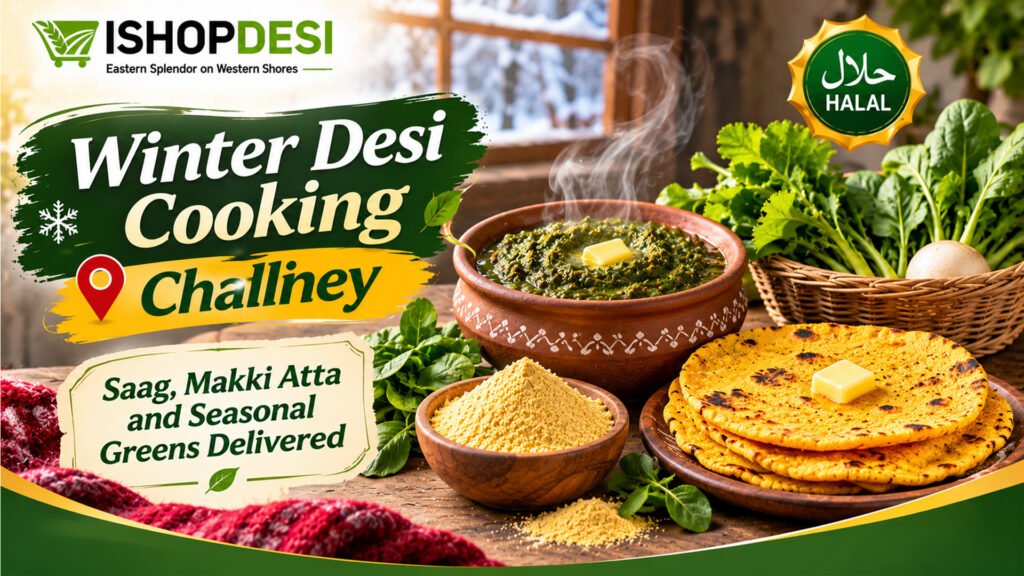
Some winter meals feel comforting before you even take the first bite.
You walk into the kitchen on a cold afternoon and notice a large pot simmering on the hob. The aroma of garlic and green chillies fills the room, while someone prepares fresh makki di roti to serve alongside it.
For many Punjabi and other South Asian families, saag is more than an ordinary vegetable dish. It brings back memories of home cooking, family gatherings and the familiar flavours of colder months.
But preparing traditional saag in the UK requires a little planning.
Fresh mustard greens may not always be as easy to find as spinach. Makki atta is different from ordinary wheat flour, and not every leafy vegetable produces the same flavour or texture when cooked.
For households exploring desi winter vegetables delivery Challney, online grocery shopping can offer another way to look for familiar seasonal ingredients without visiting several shops.
The key is understanding which greens suit your recipe, how to combine them and which additional ingredients are needed for a complete meal.
This guide explores traditional winter vegetables, saag preparation, makki atta, seasonal shopping and practical cooking ideas for families in Challney, Luton.
Why Winter Is Special for Traditional Desi Cooking
Pakistani and Indian cooking changes with the seasons in many households.
During warmer months, families may prefer lighter dishes, salads or simpler vegetable preparations.
When the temperature drops, slow-cooked greens, warming lentils and freshly prepared breads become particularly appealing.
Traditional Punjabi winter food is especially associated with sarson ka saag and makki di roti.
However, these dishes are not restricted to one season, and families across different regions prepare their own variations.
Seasonal Ingredients Influence Traditional Recipes
Certain leafy greens are traditionally associated with cooler weather.
Their availability in British shops can depend on suppliers, growing conditions and the time of year.
Familiar Food Connects Families with Their Traditions
A bowl of saag may remind someone of meals prepared by parents or grandparents.
Even when ingredients are adapted to suit availability in the UK, the dish can retain much of its familiar character.
Winter Cooking Encourages Shared Meals
Traditional saag is often served with freshly prepared bread and suitable accompaniments.
It can become the centre of a relaxed family lunch or dinner.
The goal is not to recreate every detail perfectly.
It is to prepare enjoyable food using suitable ingredients and methods.
What Is Saag, and Which Greens Are Traditionally Used?
The word saag can refer to leafy greens or dishes prepared from them.
However, not all saag recipes are identical.
Some use mustard greens, while others feature spinach, bathua or different combinations of leaves.
Their flavours, textures and preparation requirements vary.
Sarson – Mustard Greens
Sarson, commonly associated with mustard greens, is particularly familiar in traditional Punjabi cooking.
Mustard greens have a distinctive flavour that can be more pronounced than spinach.
They are a key ingredient in many sarson ka saag recipes.
Palak – Spinach
Palak is spinach.
It is widely used in Indian and Pakistani cooking, including palak paneer and other vegetable dishes.
Spinach has a different texture and flavour from mustard greens.
It may be used alongside sarson in some recipes.
Bathua – Lamb’s Quarters
Bathua is a leafy plant traditionally used in various South Asian preparations.
It may be included in certain saag recipes.
However, availability can vary considerably in the UK.
Only use correctly identified, food-grade greens from reliable sources.
Methi – Fenugreek Leaves
Fresh methi leaves have a distinctive flavour.
They appear in various vegetable dishes and flatbreads.
Methi is not automatically a direct replacement for mustard greens.
Mixed Leafy Greens
Some households prepare saag using a combination of suitable leaves.
This can create a different flavour and texture from a recipe using mustard greens alone.
| Leafy green | Familiar Desi name | Common culinary use |
|---|---|---|
| Mustard greens | Sarson | Traditional Punjabi saag |
| Spinach | Palak | Saag, palak paneer and curries |
| Lamb’s quarters | Bathua | Selected traditional leafy preparations |
| Fenugreek leaves | Methi | Vegetable dishes and flatbreads |
| Other suitable greens | Varies | Recipe-specific preparations |
For additional guidance on selecting South Asian vegetables, IShopDesi’s article on buying Desi vegetables online in Luton explores familiar produce and everyday shopping considerations.
Sarson Ka Saag vs Palak Saag: What’s the Difference?
Both dishes feature leafy vegetables, but they don’t necessarily taste the same.
Sarson Ka Saag
Traditional sarson ka saag prominently features mustard greens.
Many recipes combine them with other suitable leaves.
The finished dish often has a distinctive flavour and thick consistency.
Palak Saag
Palak-based preparations primarily use spinach.
They may be smoother and have a different flavour profile.
Can You Replace Sarson with Palak?
Spinach can be used to prepare a leafy vegetable dish, but the result will not be identical to traditional mustard-green saag.
If a recipe specifically depends on sarson, the substitution changes its character.
What If Mustard Greens Aren’t Available?
A household can choose a different leafy-green recipe rather than assuming all greens will create the same result.
The best approach is to adapt the dish thoughtfully and acknowledge the difference.
How to Choose Fresh Greens for Homemade Saag
Buying leafy vegetables requires attention to quality and intended use.
A large bunch of greens may look attractive, but the leaves still need careful inspection and preparation.
Examine the Leaves
Look for produce in suitable condition.
Avoid leaves showing signs of significant deterioration, slime or mould.
Check the Product Name
Mustard greens and spinach are different vegetables.
Ensure the listing identifies the product accurately.
Consider the Quantity
Leafy vegetables can reduce considerably in volume when cooked.
However, the amount required depends on the recipe.
Review Storage Requirements
Fresh greens are perishable.
Follow the retailer’s storage guidance and use them within a suitable period.
Avoid Buying Excessive Amounts
A very large quantity may be difficult to prepare before it deteriorates.
Choose according to actual meal plans.
For more information, IShopDesi’s guide to fresh vegetables online in Luton discusses practical selection and storage considerations.
How to Prepare Traditional Punjabi Saag at Home
Traditional saag recipes vary between families.
Some use mustard greens alone, while others combine sarson with spinach or bathua.
The following approach explains the main preparation stages without replacing a complete recipe.
Step 1: Sort and Inspect the Greens
Remove unsuitable leaves and excessively tough parts according to the recipe.
Check for dirt or debris.
Step 2: Wash Thoroughly
Leafy vegetables can hold soil between their leaves and stems.
Wash carefully using appropriate food-safe methods.
Step 3: Prepare the Leaves
Some recipes call for chopping greens before cooking.
Others use different preparation methods.
Step 4: Cook Until Appropriately Tender
Traditional saag is often cooked until the greens are tender.
Cooking time depends on the type and quantity of leaves.
Step 5: Adjust the Texture
Some recipes mash the cooked greens.
Others use a blender or another method.
The desired consistency varies.
Step 6: Add Suitable Seasonings
Ginger, garlic, chillies and other seasonings may be used.
Some recipes prepare a separate tempering.
Step 7: Serve with Appropriate Accompaniments
Makki di roti is a familiar traditional pairing.
Other suitable breads may also be served according to preference.
Important: Follow a reliable recipe for exact quantities, cooking times and ingredient combinations. Different greens should not automatically be prepared using identical methods.
Makki Atta: The Essential Ingredient for Makki Di Roti
Traditional Punjabi saag is closely associated with makki di roti.
But choosing the correct flour can be confusing for shoppers in the UK.
The terms makki atta, maize flour, cornmeal and cornflour are not always used consistently across packaging and regional markets.
What Is Makki Atta?
Makki atta is flour made from maize.
It is traditionally used to prepare makki di roti and other suitable dishes.
Is Makki Atta the Same as British Cornflour?
Not necessarily.
In the UK, cornflour commonly refers to a fine white starch used for thickening sauces.
Traditional makki atta is generally a maize-based flour used for cooking, not simply a starch thickener.
Customers should check the exact product description.
What About Polenta?
Polenta products are made from maize but vary in grind and intended use.
They should not automatically be substituted for makki atta in identical quantities.
Does Makki Atta Contain Gluten?
Pure maize does not naturally contain gluten.
However, manufacturing cross-contact and added ingredients matter.
People with coeliac disease or other strict dietary requirements should choose products appropriately labelled for their needs.
How Much Makki Atta Should You Buy?
Start with the number of rotis required by the recipe.
A smaller pack may be practical for someone preparing makki di roti occasionally.
For broader information about flour shopping, IShopDesi’s guide to buying atta flour online in Luton explains useful considerations when choosing traditional cooking flours.
Making Makki Di Roti: Why the Dough Feels Different
Someone accustomed to wheat chapati dough may find makki atta more difficult to handle.
This is normal.
Maize flour does not form the same gluten structure as wheat atta.
As a result, makki dough behaves differently.
Why Makki Roti Can Crack
The dough may be more fragile because it lacks the elasticity associated with wheat gluten.
Handling and moisture levels are important.
Use an Appropriate Recipe
Traditional techniques vary.
Some cooks shape the dough by hand, while others use suitable surfaces or other methods.
Don’t Expect Wheat-Chapati Texture
Makki di roti has its own characteristics.
It should not be judged entirely against a soft wheat chapati.
Cooking Requires Care
Follow a recipe that explains shaping and cooking techniques.
The appropriate method depends on the flour and dough.
Serve Fresh Where Practical
Many people enjoy makki di roti freshly prepared with saag.
However, serving and storage should follow suitable food-safety practices.
What Goes Well with Saag and Makki Di Roti?
A traditional winter meal can be relatively simple.
Saag and makki di roti may provide the main combination.
Additional accompaniments depend on household preferences.
Suitable Butter or Ghee
Some families serve makki di roti with butter or ghee.
Choose quantities according to dietary preferences.
Fresh Green Chillies
Green chillies can provide additional heat.
Their intensity varies.
Onion Salad
A simple onion-based salad may accompany the meal.
Wash and prepare fresh produce hygienically.
Plain Yoghurt
Some households prefer yoghurt alongside strongly seasoned dishes.
Keep dairy products appropriately refrigerated.
Traditional Drinks
Depending on personal preference, a suitable drink may complement the meal.
Not every winter dinner needs several additional dishes.
The appeal often comes from the combination of freshly prepared greens, bread and familiar seasonings.
Other Winter Desi Vegetable Dishes Worth Trying
Saag is not the only vegetable preparation associated with home cooking during colder months.
Different vegetables can provide variety.
Aloo Methi
Aloo methi combines potatoes with fenugreek leaves.
The flavour differs from palak or sarson.
Palak Paneer
Palak paneer combines spinach with paneer.
Paneer is a dairy product, so it is not suitable for vegan diets unless replaced with an appropriate alternative.
Gobi Aloo
Cauliflower and potatoes appear in many traditional recipes.
Their preparation should account for different cooking characteristics.
Mooli-Based Dishes
Mooli, or radish, is used in various South Asian preparations.
Some recipes use the root, while others incorporate the leaves where suitable.
Vegetable Daal
Lentils can be combined with selected vegetables.
The appropriate ingredients depend on the recipe.
For more inspiration, IShopDesi’s article on easy sabzi ideas using fresh vegetables explores everyday vegetable dishes.
A Practical Winter Grocery Basket for Challney Families
A successful saag meal needs more than one vegetable.
The complete grocery basket should reflect the intended recipes.
| Category | Ingredients to consider | Important check |
|---|---|---|
| Leafy greens | Mustard greens, spinach, suitable alternatives | Correct variety and freshness |
| Flour | Makki atta | Product type and grind |
| Aromatics | Ginger, garlic | Quantity and condition |
| Seasonings | Chillies, cumin and recipe-specific spices | Whole or ground |
| Cooking ingredients | Appropriate oil, butter or ghee | Dietary preferences |
| Accompaniments | Yoghurt, onions or other suitable products | Storage and allergens |
| Other vegetables | Potatoes, cauliflower, methi | Planned meals |
| Pantry staples | Lentils, rice, atta | Existing household supplies |
The list is illustrative and does not confirm that every product is available from a particular retailer.
Check Existing Ingredients First
Spices and cooking fats may already be available.
Choose the Greens Before Planning the Recipe
If mustard greens are essential to the intended preparation, confirm their availability.
Don’t Buy Unnecessary Flour Varieties
Makki atta and wheat atta have different uses.
Purchase according to the meals being prepared.
Review the Complete Recipe
Some saag recipes include additional ingredients to influence texture or flavour.
Check these before shopping.
How to Plan a Week of Winter Vegetable Meals
Seasonal grocery shopping works best when ingredients can be used across several meals.
A household might prepare saag at the weekend and choose simpler vegetable dishes during the working week.
| Day | Meal idea | Main ingredients |
|---|---|---|
| Monday | Masoor daal with rice | Lentils and basmati |
| Tuesday | Aloo methi with chapati | Potatoes and fenugreek leaves |
| Wednesday | Palak paneer | Spinach and paneer |
| Thursday | Gobi aloo | Cauliflower and potatoes |
| Friday | Vegetable pulao | Rice and suitable vegetables |
| Saturday | Sarson ka saag | Mustard greens and selected seasonings |
| Sunday | Makki di roti with saag | Makki atta and prepared saag |
This is a sample menu rather than a fixed dietary recommendation.
Recipes, quantities and preparation requirements depend on the household.
Use Perishable Greens Promptly
Fresh leafy vegetables may not remain suitable for the entire week.
Arrange meals according to product condition and storage requirements.
Keep Variety in the Menu
Not every meal needs to be based on leafy vegetables.
Lentils, grains and other suitable ingredients can provide variety.
Avoid Cooking More Than Can Be Stored Safely
Large quantities of prepared food need appropriate cooling and refrigeration.
Choose realistic portions.
The Role of Spices in Winter Saag and Sabzi
Seasonings can change the flavour of leafy vegetables considerably.
However, a good saag recipe does not require every spice in the cupboard.
Ginger
Ginger provides a familiar aromatic flavour.
Fresh and ground ginger are not identical.
Garlic
Garlic is used in numerous traditional preparations.
Some recipes incorporate it during cooking, while others use it in a tempering.
Green Chillies
Green chillies add heat and flavour.
Their strength varies.
Cumin
Whole cumin seeds may be used in selected tempering methods.
Ground cumin has different applications.
Garam Masala
Some recipes include garam masala.
However, it is not essential to every saag preparation.
Its composition varies by manufacturer.
Follow the Dish, Not a Generic Spice List
Different regional recipes use different combinations.
For more information, IShopDesi’s guide to Pakistani spices online in the UK explains common seasonings used in Desi cooking.
How to Wash and Store Fresh Leafy Greens Safely
Leafy greens can carry soil and microorganisms.
Proper washing and storage are important.
Inspect Before Preparation
Remove leaves showing significant deterioration.
Wash Carefully
Follow appropriate food-safety guidance for fresh produce.
Pay attention to areas where soil may collect.
Prevent Cross-Contamination
Keep vegetables separate from raw meat and its juices.
Refrigerate Where Appropriate
Follow product-specific storage instructions.
Don’t Assume All Greens Have the Same Shelf Life
Different vegetables and packaging conditions can affect freshness.
Cook According to the Recipe
Leafy vegetables have different textures and cooking requirements.
Store Cooked Saag Safely
Cool cooked food promptly and refrigerate in suitable containers.
Follow current UK food-safety guidance for leftovers and reheating.
Can You Freeze Homemade Saag?
Some cooked leafy-green dishes can be frozen when prepared and handled appropriately.
However, the finished texture may change after freezing and reheating.
Cool Properly Before Freezing
Cooked food should be cooled promptly using appropriate methods.
Use Suitable Containers
Choose food-safe freezer containers or packaging.
Label the Contents
Record the dish and freezing date.
Avoid Repeated Reheating
Follow safe storage and reheating guidance.
Consider Texture Changes
Some ingredients may soften or release moisture after freezing.
Don’t Assume Every Saag Recipe Freezes Identically
Recipes containing different ingredients may behave differently.
Follow suitable recipe and food-safety guidance.
Common Mistakes When Shopping for Winter Desi Vegetables
Mistake 1: Assuming Every Leafy Green Is Sarson
Spinach, mustard greens and fenugreek leaves have different flavours.
Better approach: Check the exact product name.
Mistake 2: Buying British Cornflour Instead of Makki Atta
These products may have different culinary purposes.
Better approach: Review the flour description carefully.
Mistake 3: Purchasing Too Many Fresh Greens
Leafy vegetables can deteriorate before use.
Better approach: Match quantities to planned meals.
Mistake 4: Forgetting the Additional Ingredients
Saag may require garlic, ginger, chillies or other recipe-specific products.
Better approach: Review the full recipe.
Mistake 5: Assuming All Saag Recipes Taste the Same
Mustard greens and spinach produce different flavours.
Better approach: Choose the intended traditional preparation.
Mistake 6: Using Wheat-Chapati Methods for Makki Roti
Maize flour behaves differently from wheat flour.
Better approach: Follow an appropriate makki di roti recipe.
Mistake 7: Assuming Seasonal Vegetables Are Always Available
Stock can vary by retailer and time of year.
Better approach: Confirm current availability before planning a special meal.
Buying Winter Desi Vegetables Online in Challney
For customers researching buy Desi winter vegetables online Challney, product accuracy matters.
A general listing for leafy vegetables may not provide enough information for a specific traditional recipe.
Confirm the Vegetable Variety
Check whether the product is mustard greens, spinach, fenugreek leaves or another type.
Review the Quantity
Fresh greens may be sold by weight, bunch or another unit.
Check Product Condition
Review the retailer’s available quality and handling information.
Confirm Makki Atta Details
Check the flour type, ingredients and intended use.
Review Delivery Arrangements
Fresh produce requires appropriate handling.
Check current delivery availability and eligibility for the particular Challney postcode.
Consider the Total Basket
Fresh greens, flour, spices and other groceries may be available through the same retailer.
However, the exact selection should be confirmed before checkout.
For broader advice about organising household groceries, IShopDesi’s article on planning an online halal grocery basket in Luton discusses useful shopping considerations.
How IShopDesi Can Support Winter Desi Cooking in Challney
IShopDesi provides an online platform for exploring South Asian groceries and traditional cooking ingredients.
For Challney households planning winter dishes, the practical starting point is identifying the exact ingredients needed.
A traditional sarson ka saag recipe may require mustard greens and other suitable leaves.
Makki di roti requires an appropriate maize flour rather than an unsuitable starch product.
Other winter meals may use spinach, methi, cauliflower or familiar pantry staples.
Customers can explore IShopDesi’s current grocery listings for relevant products, but exact seasonal availability, pack sizes, prices and delivery arrangements should be confirmed before ordering.
For related inspiration, its guide to Asian grocery pantry staples in Luton explains how traditional ingredients fit into everyday home cooking.
The most useful winter grocery basket is built around the dishes a household genuinely wants to prepare.
Frequently Asked Questions
Can I order Desi winter vegetables online in Challney, Luton?
You can explore online South Asian grocery retailers such as IShopDesi. Confirm current product availability and delivery coverage for the specific Challney postcode.
What vegetables are traditionally used in sarson ka saag?
Mustard greens are central to many traditional recipes. Some preparations also include spinach, bathua or other suitable leafy greens.
Is sarson the same as palak?
No. Sarson usually refers to mustard greens, while palak is spinach. Their flavours and textures differ.
Can I make saag using only spinach?
Yes, spinach can be used for palak-based saag dishes. However, the result will differ from traditional mustard-green sarson ka saag.
What is makki atta?
Makki atta is maize flour traditionally used for makki di roti and other suitable preparations.
Is makki atta the same as cornflour in the UK?
Not necessarily. British cornflour commonly refers to maize starch used for thickening, while traditional makki atta is a maize-based flour for dishes such as makki di roti.
Is makki atta gluten-free?
Pure maize does not naturally contain gluten, but cross-contact and added ingredients can matter. Check suitable gluten-free labelling where required.
Can I use ordinary wheat atta for makki di roti?
Wheat atta behaves differently from maize flour. Using it changes the traditional preparation.
What spices are commonly used in saag?
Ginger, garlic, chillies and cumin appear in various recipes. Exact combinations depend on household and regional traditions.
Can homemade saag be frozen?
Some cooked saag dishes can be frozen if prepared, cooled and stored safely. Texture may change after thawing.
What vegetables go well with winter Desi meals?
Mustard greens, spinach, methi, cauliflower, potatoes and other suitable produce appear in different traditional preparations.
Is seasonal Desi vegetable delivery guaranteed in Challney?
No. Availability and delivery arrangements depend on the retailer and current stock. Confirm the product and postcode before ordering.
Conclusion: Bring Traditional Winter Flavours into Your Challney Kitchen
Winter Desi cooking is about more than preparing a warm meal.
For many families, dishes such as sarson ka saag and makki di roti represent familiar traditions, shared experiences and the comforting flavours of home.
But enjoying those dishes in the UK begins with choosing the right ingredients.
Mustard greens, spinach and methi have different culinary roles. Makki atta is not the same as ordinary wheat flour or every product labelled cornflour.
For Challney households, online South Asian grocery shopping can offer another way to explore these ingredients when suitable products and delivery options are available.
Start with the recipe, confirm the greens and flour, and choose quantities that suit the family.
With thoughtful shopping and preparation, traditional winter meals can remain a satisfying part of everyday home cooking.